
It makes assaults such as firmware tampering, key theft, and device spoofing tougher to perform at scale. For instance, a tool may confirm firmware signatures using a public key saved in hardware. If the firmware has been modified, the boot process can stop, recover, or report the device as untrusted.
- Root of trust establishes the safe process boot up chain, referred to as Chain of Belief, used to validate software and hardware used on the gadget.
- A secure element can protect a key whereas the encompassing utility misuses the permitted operation.
- For accessibility, we will use a normal microcontroller on this demo rather than an actual hardware root of belief; that mentioned, the ideas on this demo apply readily to any HWRoT.
- Whereas it may not get as much attention as its software counterparts, hardware safety is vitally important in modern methods.
The Method It Works: Establishing The Chain Of Belief
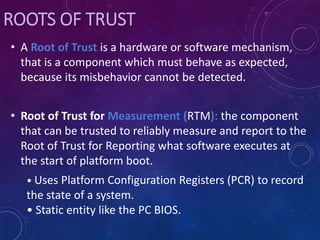
A Hardware Root of Belief is a critical element in defending against these threats. These keys are important for person authentication, safe communication, and knowledge safety in devices such as IoT, servers, and computer systems. A TEE is an execution setting isolated from software program outdoors the TEE. It protects selected code and information towards a defined set of threats. Measured Boot is the process where the RoT cryptographically measures the hash of the subsequent component within the boot sequence earlier than executing it. Quite than simply loading code, the system calculates a unique digital fingerprint (hash) of the code.
Architecting Ai Factories: Designing Ai Systems At Rack Scale (part 2 Of
They additionally be positive that cryptographic operations occur inside a trusted setting, preventing delicate knowledge from being uncovered in system reminiscence. A hardware root of trust strengthens cryptographic techniques by defending the place to begin of belief. It can generate, retailer, or protect non-public keys so they’re harder to extract than keys stored only in software. A Root of Belief, commonly shortened to RoT, is the foundational security element of a linked device. We design and combine hardware root-of-trust architectures for protection — TPM-anchored system id, HSM-backed PKI, measured boot, and attestation-gated classified-network access.
What Are The Methods To Keep Away From Root Of Trust Attacks?

Key extraction or duplication attacks contain stealing, copying, or misusing the confidential cryptographic keys safeguarded by the RoT. A firmware assault targets the firmware of a tool, which is a software program that tells the device (computer, smartwatch, or smartphone) the method to operate when powered on. A safety secret is a roaming or dedicated hardware cryptographic authenticator, similar to a USB, https://auto-cast.com/toyota/in-depth-review-and-specs-of-the-toyota-land-cruiser-cygnus/ NFC, or Bluetooth key.
Contact Beningo Embedded Group
The code or cryptographic keys saved throughout the RoT cannot be altered or overwritten, even by administrative capabilities or the operating system itself. This permanence is normally achieved by burning the code into Read-Only Memory (ROM) or using write-protected hardware fuses during manufacturing. Immutability ensures that even when malware positive aspects root entry to the operating system, it cannot modify the RoT to cover its presence or persist throughout reboots. This course of often helps secure boot, measured boot, device identity, key protection, and cryptographic attestation. Instead of assuming software is secure, the gadget checks whether every layer matches what is anticipated. A Root-of-Trust is an immutable process or identification used as the first entity in a belief chain.